NETFLIX IS BETTING BIG ON AFRICAN DRAMAS—AND IT’S PAYING OFF
Updated: Aug 22
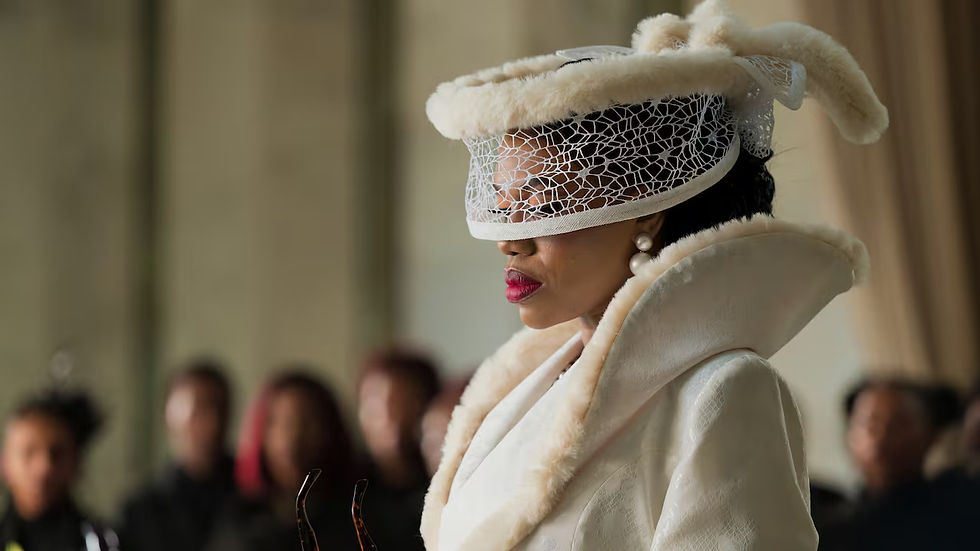
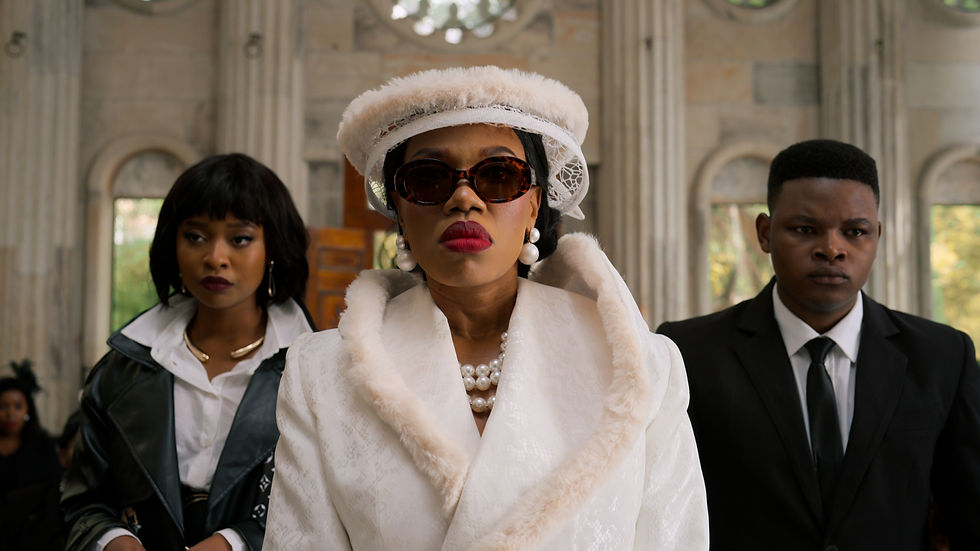
Netflix's The Polygamist opens at a funeral. Jonasi Gomora, wealthy businessman, husband, father and apparently South Africa’s busiest adulterer, is dead. And his glamorous wife Joyce, wearing all-white of course, has fully leaned into grief as part of her brand. “Things could have ended differently” for them “But you decided to be a smart-ass”, she says over his open casket. Then the series rewinds and spends 22 episodes explaining how everybody got here. And trust me, you’ll be clicking “next episode” for all 22 of them.
And clearly, you won't be alone. The Zulu-language South African telenovela has become a national talking point at home and a breakout hit everywhere else, with audiences from Romania to Hong Kong to the U.S. bingeing the betrayals, the twists and all the family drama. In its first month, The Polygamist racked up more than 23 million views, reached Netflix’s Top 10 in 62 countries and climbed to No. 1 in 21 of them.
And increasingly, some of Netflix’s most addictive television is coming from Africa. Shows like Blood & Water, Savage Beauty, Fatal Seduction and Blood Legacy are packed with generational dysfunction, twisty plots and people making decisions we all know are terrible. With The Polygamist joining them as another hit, the pattern is getting hard to miss: Netflix has found one of its most reliable sources of binge TV in African drama.
Greed is a Disease. You Have Me and Still Chose Polygamy?
I’ll admit, I didn’t press play expecting to get completely sucked in. I just wanted to see what everybody was talking about, get a little mess and keep it moving.
That did not happen.
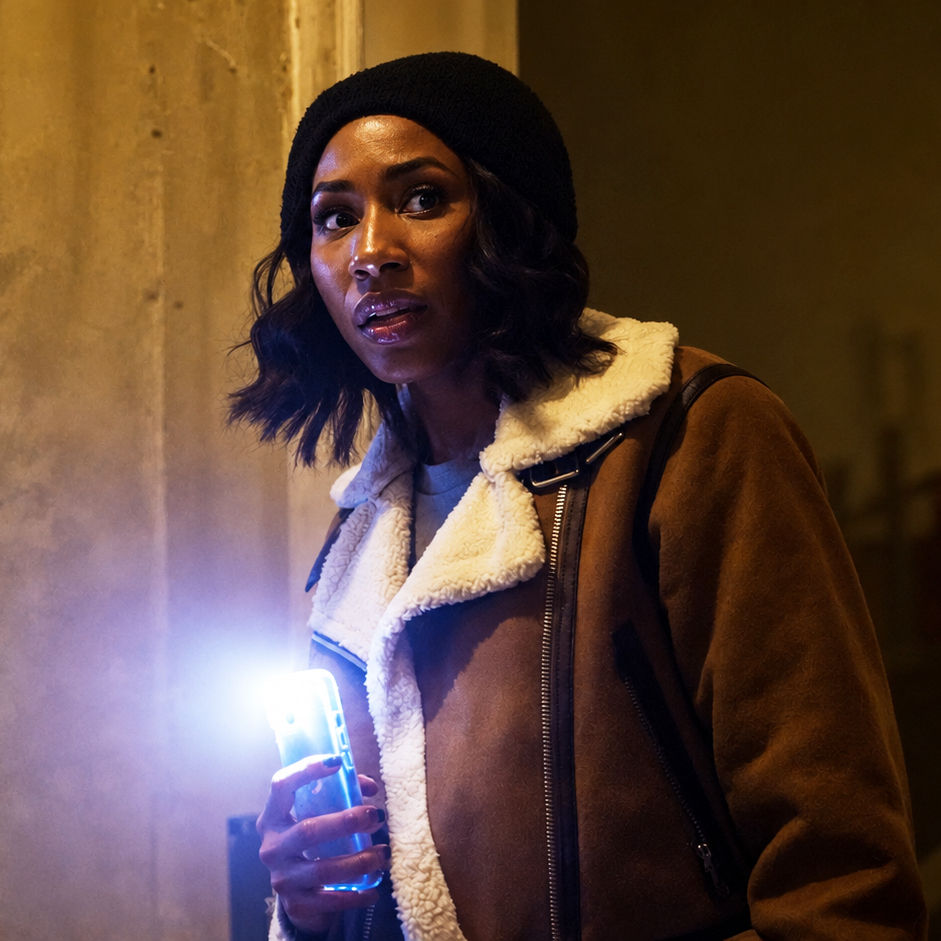
At the center of The Polygamist is Joyce, a glamorous influencer (played by Gugu Gumede) who's built a very comfortable life with her husband Jonasi, a wealthy businessman, and their three children. Jonasi is hardly husband of the year. But whatever he gets up to outside their marriage has never threatened Joyce’s position within it. She is the wife. This is their home. This is their family.
Then Jonasi decides that arrangement is no longer enough. He wants more.
He doesn’t just want the mistresses already tucked around the edges of his life. He wants several wives, several homes and several sets of children who are all aware of one another and, ideally, willing to function as one big happy family.

Joyce, understandably, isn't thrilled.
And watching her try to hold onto her marriage, her status and occasionally her sanity as Jonasi keeps expanding the family is where so much of the fun comes from. The predictable catfighting is juicy and unhinged. Hands are thrown, wigs are snatched and things may or may not be set on fire.
Every new woman threatens something slightly different: Joyce's place beside him, the future of their children, her financial security, the image she presents to the world. And because Joyce enjoys the life she and Jonasi have built together, (and there’s real love tangled up in all that anger and betrayal) walking away isn’t nearly as simple as it might look.
That’s also what makes Jonasi more interesting than your standard unfaithful scoundrel. Played by S’dumo Mtshali, he’s charming, playful, forceful and maddeningly persuasive. He has a way of creating a bespoke little world of attention around each woman he courts that makes you understand, even when you absolutely do not approve, why they keep letting him back in.
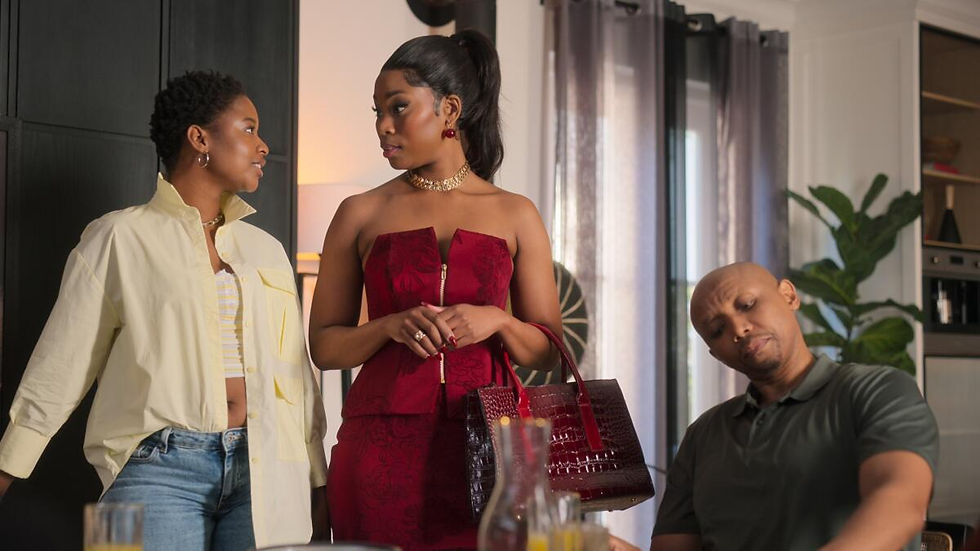
After a while, calling Jonasi a cheater starts to feel inadequate. Cheating suggests you occasionally sneak somewhere you shouldn’t be. Jonasi has whole infrastructure.
And Joyce is the person most directly forced to live inside it.
That’s where The Polygamist starts becoming more interesting than its extremely soapy premise suggests. Jonasi’s romantic chaos opens the door to bigger questions about marriage, tradition, money, status and what happens when old expectations meet a very modern kind of Black wealth. It’s still a soap—thank God—but who Jonasi's sleeping with is only half the story. The other half is what everyone around him is expected to sacrifice to make his vision of family work.
The Polygamist is also a thoroughly pan-African affair. It’s adapted from a novel by Zimbabwean writer Sue Nyathi and directed by Nigerian-born Akin Omotoso alongside South African directors Nthabi Tau and Rolie Nikiwe. And the world they create is unapologetically Black and African. Characters move through family councils and influencer culture, expensive labels and lobola without stopping to translate any of it for an outside audience. The show assumes you can keep up.
And that may be part of why it travels so well. Beyond all the mess is something pretty universal: how much foolishness people will tolerate for love, and how much more they might tolerate when money is involved.
And The Polygamist isn’t an outlier.
Loyalty Means Nothing When It's Not Appreciated.
Blood & Water, Netflix’s second African original series, looks like a pretty standard teen drama on the surface. Puleng Khumalo transfers to an elite Cape Town private school after becoming convinced that star swimmer Fikile Bhele might be the sister who was abducted from her family as a baby. Soon she’s hiding her identity, digging into birth records, getting caught up in Fikile’s affair with her married swim coach and discovering that her own father may be connected to the kidnapping.
And the show, to my surprise, has enough control over its own ridiculousness to make all of that work. It’s glossy and fast, as wild as Riverdale, as risqué as Elite and as full of acerbic wit as Gossip Girl. And it definitely deserves the same unfiltered devotion from shameless adults who love teen TV (myself included).

Savage Beauty has a completely different grip. Zinhle Manzini gets close to the wealthy Bhengu family with one goal: revenge. Years earlier, the family’s beauty company used Zinhle and her siblings as test subjects for a dangerous skin-lightening product that permanently scarred them. When she wins a “Face of Bhengu Beauty” contest, she gets the opening she needs.
Created by Lebogang Mogashoa, Savage Beauty is certainly a soapy watch, but it’s not a guilty pleasure. The revenge plot gives the show room to get into class, beauty, colorism and who gets exploited so somebody else can get rich. Mogashoa and his writers make it clear that Zinhle’s place inside the Bhengu family isn’t an accident and that winning that contest means a lot more than a pretty face on a billboard.
Fatal Seduction, meanwhile, has no interest in pretending it isn’t here to be a little trashy. From the jump, it promises sex and danger in equal measure: steamy montages, breathy narration about desire, then a body being wheeled away from what looks like a crime scene. The message ain't exactly subtle. Somebody followed an impulse, and somebody else may have paid for it.
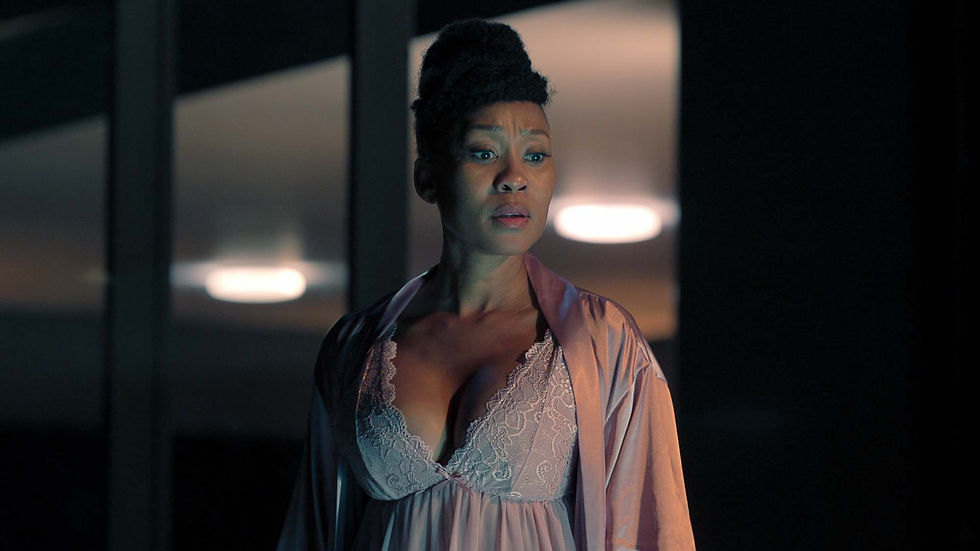
It’s a bit of a reverse take on the Fatal Attraction trope. What starts as an affair becomes stalking, obsession and a steadily escalating nightmare as the man main character Nandi thought was a sexy little escape pushes himself further into her life.
Look, you probably won’t need to think too hard while watching Fatal Seduction, but if you’re in the mood for a very, very steamy thriller, this one will keep you interested.
And that’s hardly the whole slate.
Blood Legacy turns a family business succession battle into a full-blown sibling war. Queen Sono follows a South African spy digging into the truth about her mother’s death while getting caught up in political corruption. Kings of Jo’Burg drops a supernatural family curse into Johannesburg’s criminal underworld. And Nigeria’s Òlòtūré: The Journey follows an undercover journalist posing as a sex worker whose investigation into trafficking puts her on a dangerous path toward Europe.

And Netflix isn’t done. Umthetho, a South African crime drama drops on August 14. The story follows an idealistic state prosecutor who’s forced to become a double agent inside her imprisoned older brother’s gang to keep their youngest brother alive. It sounds like another series that understands exactly how useful family can be when you need to make an already-complicated situation exponentially worse.
At this point, it’s hard to treat all of this like a lucky streak. Netflix has spent years investing in African originals and production partnerships, tapping into a rich wave of films and series from across the continent—from Nigeria’s Nollywood powerhouse to South Africa’s streaming scene. And what it has now is much more interesting than one breakout show. It has a whole slate full of unabashedly African and uniquely diverse series that understand exactly how to keep an audience invested.

Comments