MOTHER MARY IS WEIRD AS HELL—AND WEIRDLY WORKS
Updated: Aug 22
Pop stardom has always required a certain level of delusion, i.e. some willingness to believe that the person and the persona can coexist without eventually swallowing each other whole. Mother Mary takes that premise and runs it straight into the ground, then stages a very expensive, very stylized resurrection on top of it. The result is a film that treats celebrity not as a career, but as a kind of spiritual condition: all devotion, performance, and slow, creeping loss of self.
Directed by David Lowery, Mother Mary is less a traditional character study than a spectacle about what happens when a person becomes their own mythology. The film follows its titular pop icon through a loosely structured arc of touring, retreating, unraveling, and reassembling (though “arc” might be generous). Narrative here is secondary to feeling, and feeling is secondary to image. Everything is heightened, from the costumes to the emotional stakes, as if the film is constantly asking: what does it look like when a life is lived at arena-level scale?
What makes Mother Mary work—against some fairly significant odds—is that it seems fully aware of how ridiculous that question is.
MILD SPOILERS FOR "MOTHER MARY" FROM THIS POINT.
Sam, I Need a Dress.
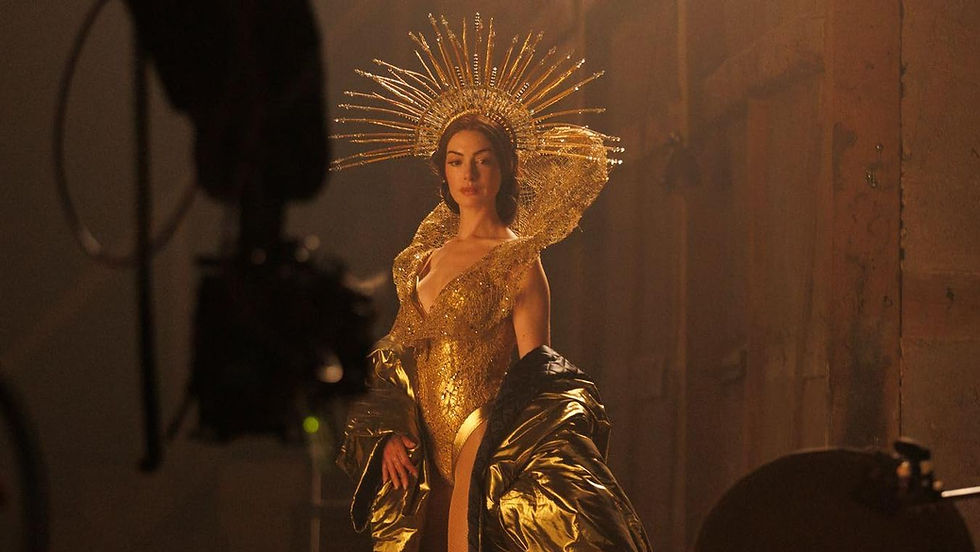
In Mother Mary, the title character (played by an almost ethereal Anne Hathaway), a global pop superstar who you could say is based on a lot of people—she’s a little bit Gaga, a little bit Dua, a smidge of Doja and Charli. She’s a whole lotta Madonna, and the sort of mega-monolithic musical superstar who could easily devote world tours to her many different eras. She's an icon, in both the modern usage and, given her heavily Catholicism-influenced haute couture, the traditional sense of the word. Some might say she is mother. And to her millions of fans, she's Mother Mary: chart-conquering singer and conduit of the divine experience known as the epic, arena-echoing pop anthem.
And right now, Mother Mary needs a dress.
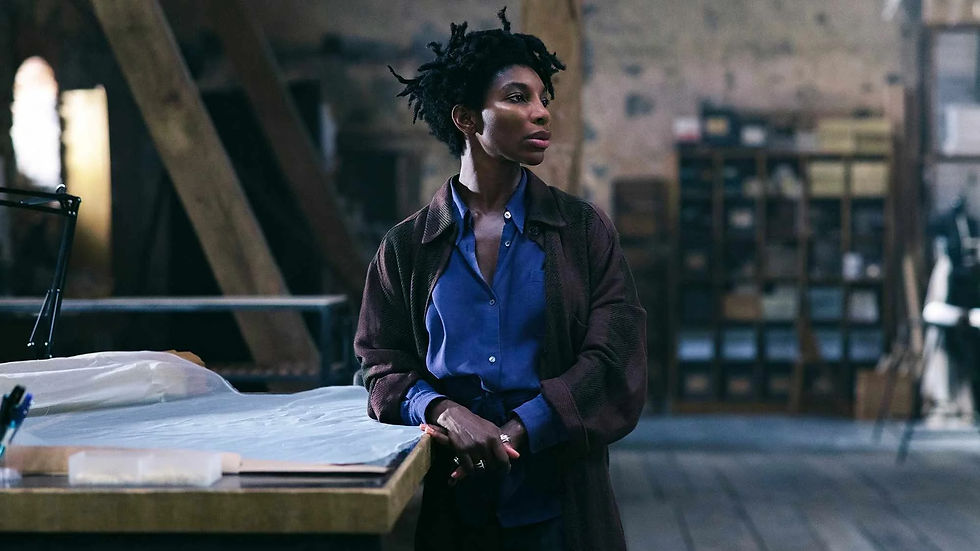
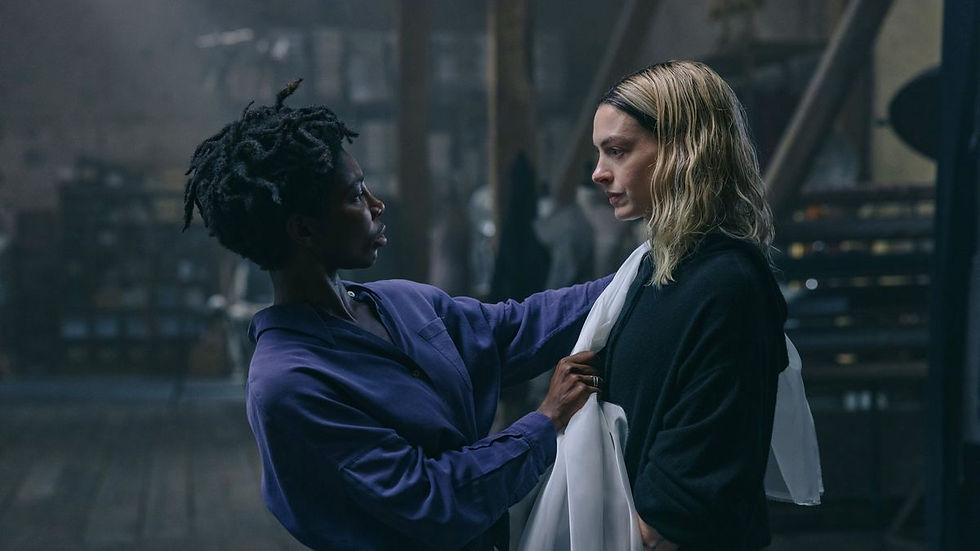
Desperate times require desperate measures, which is how this dance-pop idol ended up on the doorstep of the last place in the world she’s welcome. So much of Mother Mary’s look—as important to her reign as her music—came from the vision of a single collaborator, a fashion designer named Sam Anselm (played by a scene-stealing Michaela Coel). Together, they crafted the persona that would become a global phenomenon. Then Sam was cast out in the name of Mary going after something “new”. It broke her heart, messed with her head, and sent her into retreat at a large English country estate.
But that was a decade ago. Now, Sam is preparing for a major show of her work. And Mary—who had, let’s just say, an “unfortunate incident” during a concert that went viral—has come crawling back. The singer has booked a massive comeback performance. And it may or may not be her final blessing upon the masses. But the dress she had custom-made? Not cutting it. And she needs Sam to make her a new one, ASAP.
The Bile is Rising.
“Weird” is one of those dismissive adjectives people use for anything they don’t easily understand (or for any work that wears its idiosyncrasies on its bell sleeves.) But David Lowery—the same mind behind The Green Knight and A Ghost Story—has taken the most accessible subject imaginable, stratospheric pop stardom, and twisted it into something wonderfully, gloriously strange. Not even original songs by Jack Antonoff, Charli XCX, and FKA Twigs (all of which sound like bangers you’d hear in a vampire den at 3 a.m.) can quite anchor this in anything resembling the mainstream. Because at its core, this is a story about two creative forces circling each other and working through old wounds in real time. And the whole thing plays like a beautifully produced, slightly unhinged head trip.
Visually, Mother Mary is doing the most, which is exactly what a movie about a pop star named Mother Mary should be doing. The costumes alone seem to operate on their own narrative logic. There are robes that feel ecclesiastical until they don’t, silhouettes that suggest both sainthood and average citizen, and enough metallic sheen to make every emotional beat feel like it’s happening under a spotlight, even when it isn’t.
It’s easy to read all of this as parody. And sometimes it kind of is. But the film complicates that reading by refusing to fully detach from its own myth. It doesn’t just critique the machinery of pop stardom; it indulges in it, luxuriates in it, maybe even believes in it a little. Which is where things get interesting. Because the movie seems to understand that modern celebrity isn’t just about talent or fame. It's about narrative control, and turning your life into something consumable, legible, and, ideally, iconic. Mother Mary isn’t just a person. She’s a product, a projection, and a brand that has outgrown its host.
These Metaphors are Exhausting.
Anne Hathaway and Michaela Coel’s performances are so masterful that it elevates the entire film past it's strangeness. Mother Mary is so focused on these two performers that it would be relatively easy to rewrite this entire film into a two-person theatrical performance for a live audience. Even with supporting turns from Hunter Schafer and FKA Twigs (both compelling, both underused), their appearances border on cameo. This is Hathaway and Coel’s film, full stop.
The grounded first half where they engage in verbal cat and mouse is a staggering showcase for each of them. Coel gets the more showy of the two roles, dripping her dialogue in a cadence and tone that has equal measures of love and venom. Hathaway is far more restrained, and the more supernatural second half allow her to show the torture brewing under her skin at any moment.
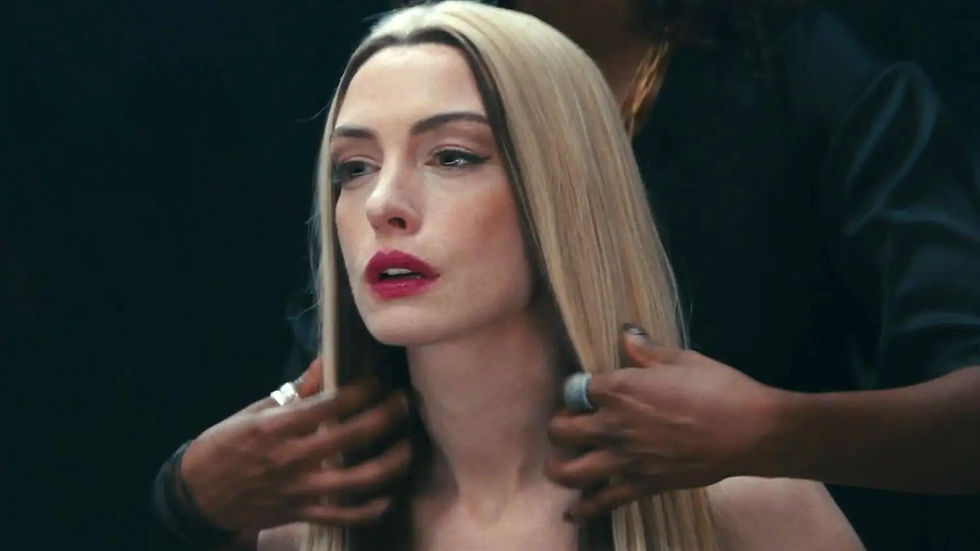
Hathaway's also at the center of Lowery’s most striking visual sequence: a looping, almost dreamlike passage where time itself seems to stretch and fold as Mary moves from performance to performance. The film literalizes the grind—endless nights, endless stages—through a series of ascending and descending staircases that feel both grand and claustrophobic. It’s hypnotic, a little disorienting, and quietly brutal in what it suggests about the cost of sustaining that level of visibility. The body keeps going. Whether the person inside can keep up iess certain.
It’s in moments like these that Mother Mary stops feeling like an abstract exercise in vibes and starts feeling like an actual movie with something actually interesting to say. Because for all its excess, all its indulgence, the film is anchored by two performances that understand exactly what kind of movie they’re in.
There May Only Be One of Us Left Standing When This is Over.
Look, the film swings—hard—at something profound, and just as often lands somewhere closer to absurd. And that's thanks, in whole, to it's driver, David Lowery. Lowery, for me, has been such a hard filmmaker to pin down. Yet he is, among other things, a reliably highfalutin-trickster-showman who likes to tease his audiences with an avant-garde sense of play. I’ve seen most of his films, and only liked one, The Green Knight, despite it infusing its King Arthur mythology roots with a little too much head-scratching magical realism for my taste.
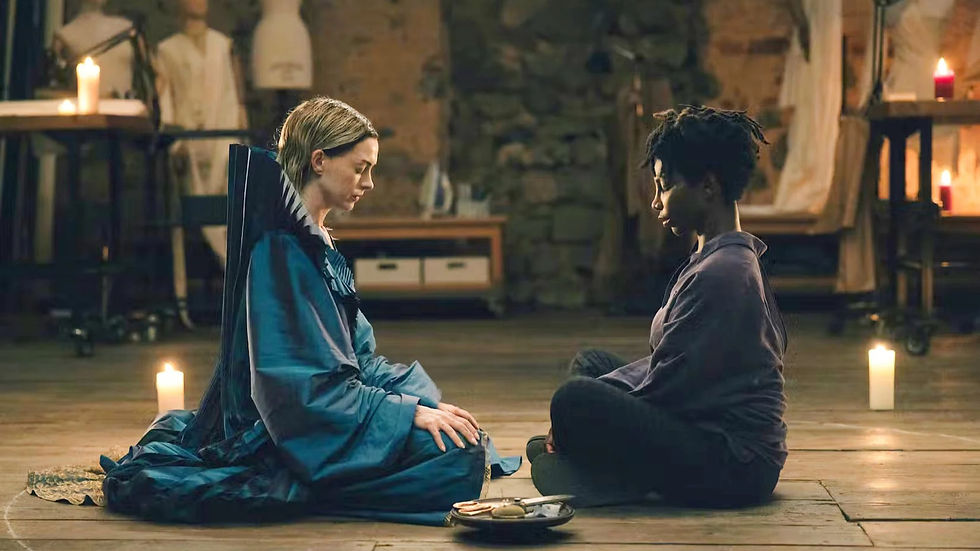
And in Mother Mary, the director gives in to that side of himself completely. All of Lowery’s usual trappings are on display making this the David Lowery-est David Lowery movie ever made. Which is to say that by the end of it, you may be scratching your head at this one too.
Between this and Opus, the Fame Monster Cinematic Universe could very soon become a thing.
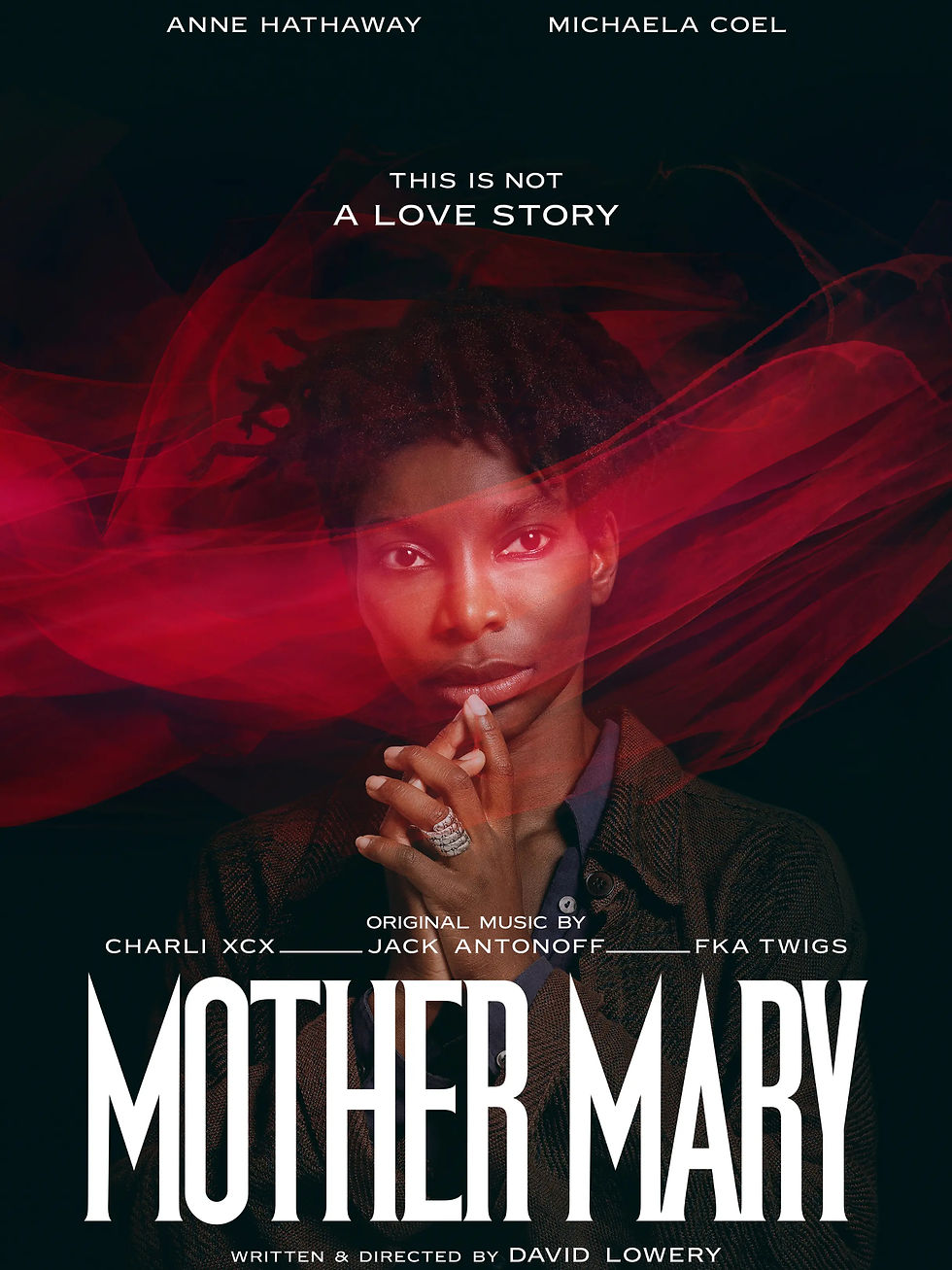
7.5/10 ★ A glitter-drenched pop fantasia that’s as ridiculous as it is riveting.


Comments