MARA BROCK AKIL ENTERS HER AUTHOR ERA WITH “THE REVELATION OF DIONNE DAPHNE”
You might not know the name Mara Brock Akil, but you definitely know her work.
She’s the writer and creator behind Girlfriends, The Game, Being Mary Jane, and, most recently, Netflix’s Forever, based on the Judy Blume novel. She’s also the only Black showrunner to have a major television series on the air every year of the 2000s.
But for all the television she’s given us, one thing was still missing from her decades-long career: a novel of her own.

Among the television creators who’ve managed to survive the industry’s increasingly unserious 21st century, Mara Brock Akil's career has been remarkably consistent. Her shows have moved from law firms to football fields, newsrooms, and first love, but her emotional territory has stayed the same: Black women trying to reconcile the lives they’ve built with the lives they imagined for themselves.
Girlfriends followed Joan Clayton, a successful young attorney approaching 30 with a thriving career, none of the romantic certainty she thought adulthood would bring, and a close-knit group of women to navigate that uncertainty with her. The Game traded corporate offices for professional sports, where Melanie Barnett juggled med school, love, and the strange gravitational pull of life beside an NFL player. And in 2013, Brock Akil gave BET its first scripted drama with Being Mary Jane, starring Gabrielle Union as a television journalist whose professional life was thriving while her personal life stubbornly refused to cooperate.
Her women are intelligent, driven, and credentialed, with elite educations, impressive careers, and the kind of composure people mistake for peace.

Success, in Akil’s world, is never the destination. It’s the starting point. The house is bought. The degree is framed. The outfit is eating. And still, there's that little voice asking, "Okay, but are we happy or just moisturized and employed?"
Though its two leads are teenagers, Forever—a cinematic series that updates Blume’s 1970s novel of first love among white high schoolers in New Jersey to center two very different Black families in L.A.—is also Akil’s meditation on parenthood. First love is the hook, but the series is just as invested in the parents watching their children step into desire, independence, and disappointment. Can parents who fear for their kids’ safety, from the threats of new technology to old-fashioned racism, allow them the freedom to get their hearts broken?
Brock Akil had been drawing insight from her own experiences. Raised in the L.A. area and, after her parents’ divorce, Kansas City, she studied journalism at Northwestern, then moved back to Los Angeles to pursue television. She arrived amid an explosion of Black sitcoms—The Fresh Prince of Bel-Air, Living Single, Martin, Family Matters—and rose through the writers’ room ranks on Fox’s South Central and UPN’s Moesha, both produced by Ralph Farquhar, an early mentor. One early triumph was “Birth Control,” the award-winning 1998 Moesha episode in which Brandy’s titular teen is prescribed birth control. (Imagine trying to get America’s TV sweetheart on the pill in the ’90s.)

Still, she knew not everything she wanted to express could be conveyed in a teen sitcom. So she started making the notes that would eventually become The Revelation of Dionne Daphne.
Akil’s debut follows a beauty editor in 1990s New York whose life has been arranged with the precision of someone who knows exactly what image can hide. Dionne’s got the career, the taste, the boyfriend, the polish. Then her boyfriend returns after their breakup with devastating news: he’s HIV-positive. Dionne goes to get tested, and while she waits for her results, she has to make a list of her former sexual partners. At the top of that list is the stepfather who abused her.
Most of Dionne Daphne is set during that two-week waiting period, but the novel keeps reaching backward, pulling Dionne through memory, denial, family history, and the shame she’s spent years styling into silence. At it's heart it’s a story about what happens when a woman who’s survived by controlling the surface finally has to confront what’s underneath.
Akil gives Dionne remarkable texture: a woman carrying old wounds trying to heal without surrendering the carefully constructed version of herself she’s relied on for years.

And self-knowledge becomes the book’s real destination.
Dionne’s path inward becomes literal when she takes a cross-country road trip to confront the people her silence has protected: the stepfather who abused her, the mother whose illusion of respectability depended on Dionne not naming what happened, and the father too absorbed in his new family and religious community to protect her. It’s less “Eat, Pray, Love” and more “Drive, Confront, Please Explain.”
Along the way, she’s challenged—often by the unlikely love interest escorting her on the trip—to consider the interior lives of people who failed her.
By the time Dionne returns to New York, she’s still waiting on her test results, but something has already shifted. She’s not healed. Mercifully, the book isn’t that corny. But she’s becoming a little more honest, and a lot more empathetic.
The novel occasionally shows its seams. A few thematic moments arrive a touch more neatly than the character work requires. But they’re small stumbles in an otherwise emotionally assured debut.

Dionne's funny, defensive, perceptive, frustrating, generous, wounded, and occasionally exhausting. In other words, a person.
And The Revelation of Dionne Daphne feels most exciting as a continuation of the women Akil’s been writing for decades. Joan wanted control. Mary Jane wanted certainty. Dionne wants the truth—but preferably without the part where the truth dismantles the life she’s spent years building.
One way to read the evolution of Akil’s storytelling is as a gradual move from the individualist ideals of the ’90s and aughts toward something softer and more communal. Joan, Melanie, and Mary Jane were surrounded by people, but so much of their drama came from insisting they could muscle through the hardest parts alone. Dionne can’t. Or maybe she finally chooses not to.
When Dionne leans on her best friend Farrah, she offers the tenderness Dionne’s mother is too wounded to give. And it almost feels like a return to Girlfriends, only more refined. Akil isn’t abandoning the women who made her work so beloved. She’s maturing with them, asking what happens after ambition and after the beautiful life has been built and it still can’t save you from yourself.
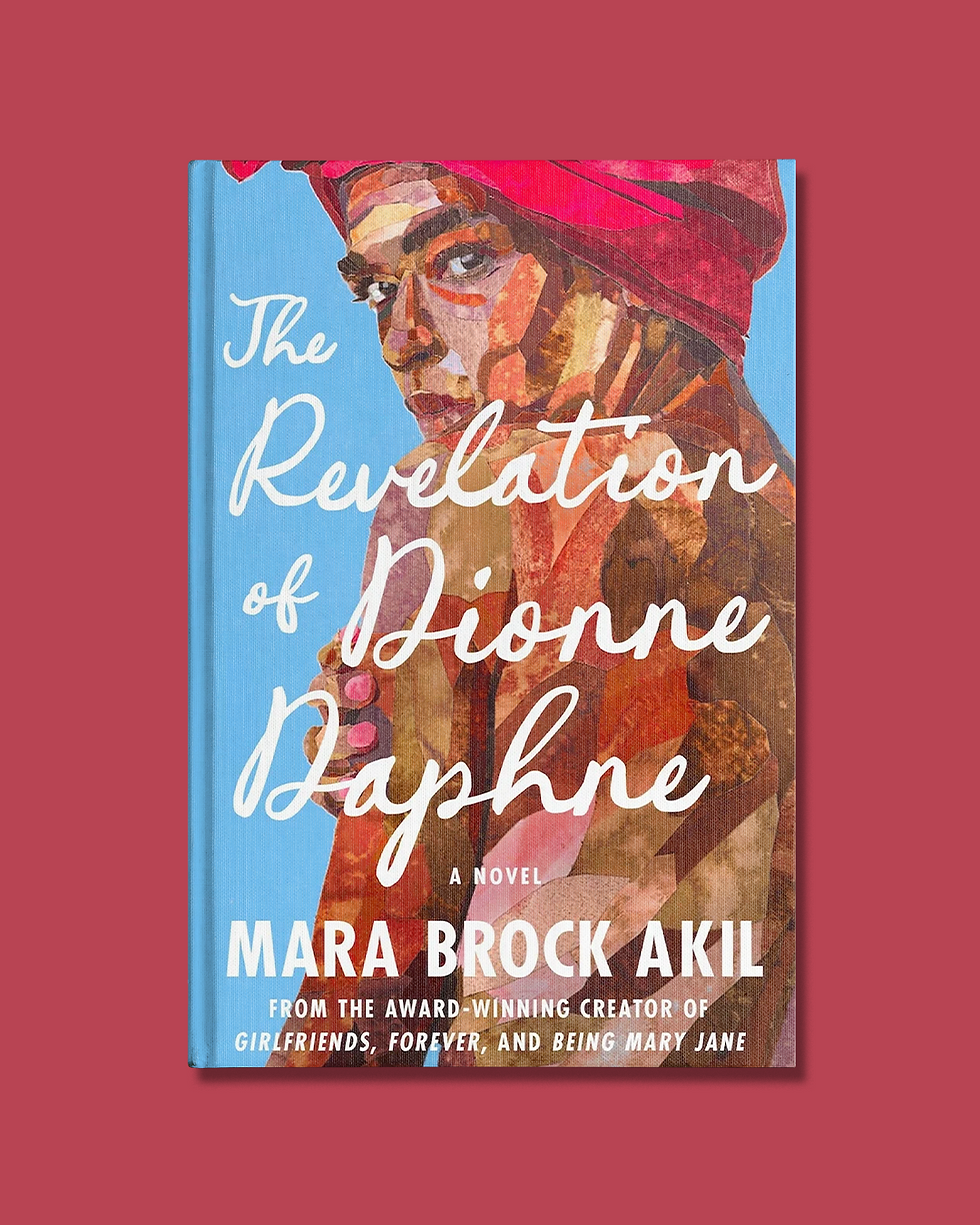
Mara Brock Akil has spent decades creating a canon of compelling, complex, deeply relatable Black female characters. She’s broken barriers writing the kind of women Hollywood was often too timid to put on screen: brilliant and flawed, beautiful and audacious, worthy of love while still very much works in progress. In doing so, she’s pushed generations of Black women to confront our relationships with shame and perfection, and how much we lose when either keeps us from being fully known.
Now, at 56, Akil is putting her pen to literal paper with her debut novel. And damn, I’m in. It’s good. And I sure hope there’s more to come.


Comments