TYLER, THE CREATOR IS EFFORTLESSLY MAGNETIC IN “MARTY SUPREME”
Marty Supreme is a movie about—and for—dreamers.
Josh Safdie’s brilliant opus stars Timothée Chalamet as Marty Mauser, an indomitable table tennis prodigy chasing greatness with a no-holds-barred intensity that will feel instantly familiar to anyone who’s ever dared to dream big.
Chalamet was born for this role. Like Marty, he's made a career out of chasing unlikely heights, and he’s surrounded here by a cast of fellow big dreamers in Safdie’s solo follow-up to Uncut Gems. Standing tall among them—making, it should be noted, his feature film acting debut—is Tyler, The Creator.

I Have a Purpose. And If You Think That's Some Sort of Blessing, It's Not.
Tyler, the Creator has spent almost his entire life trying to be a star. From an early age he wanted to make music, and he's been tunnel-visioned on that goal ever since.
His turn in Marty Supreme lands differently when you consider how long he’s been preparing for a moment like this—whether or not acting was ever the explicit goal. Long before Grammys and fashion weeks, he emerged in the early 2010s as the gravitational center of Odd Future, a collective that felt feral on the surface but was, in practice, surprisingly methodical. Tyler was the one making beats, directing videos, and turning teenage provocation into something that traveled—online, onstage, and eventually, everywhere.
By the time Flower Boy arrived in 2017, Tyler had clearly outgrown the role of rap’s resident problem child. The album was patient, inward-looking, and carefully sequenced. It was a project that actually cared about how songs spoke to one another. It was the sound of someone realizing that attention is more useful when you decide where it goes.
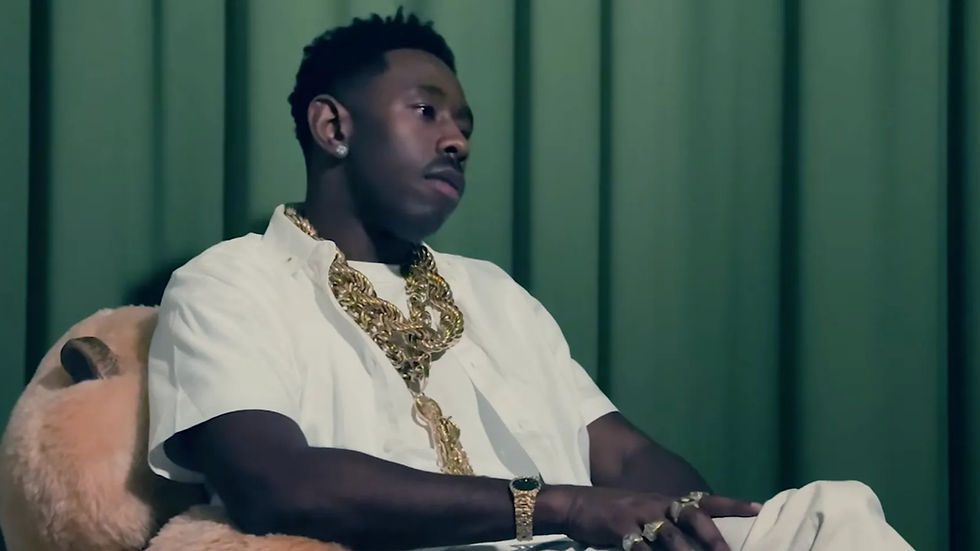
IGOR made that philosophy impossible to miss. The album wasn’t just cohesive; it was insistent, emotional, and aesthetically unified, winning Tyler his first Grammy and announcing that his real interest lay in building complete experiences. Call Me If You Get Lost followed with a looser, globe-trotting confidence—and another Grammy—proving that the discipline wasn’t a fluke, just the baseline now.
Along the way, Tyler quietly became one of pop culture’s most reliable world-builders. His music videos edged closer to short films. Golf le Fleur* evolved from a merch-adjacent side project into a legitimate fashion proposition. Even his public persona shifted—less mugging for the camera, more dry commentary from someone who knows exactly how things work and finding that knowledge amusing.
Just lookinf at the shape of his career, you quickly realize he's not here by accident. He's here after more than a decade of steadily expanding his creative authority. And Safdie’s underdog sports odyssey is the perfect foreground for Tyler to step toward his next creative pivot.

And What Do You Plan To Do If This Whole Dream of Yours Doesn't Work Out?
A dreamer in every sense of the word, Tyler (credited here as Tyler Okonma) plays Wally, Marty’s closest ally and occasional reality check. He's a fellow inhabitant of New York’s table-tennis ecosystem who understands both the thrill and the cost of wanting something. Wally knows the scene, knows the players, and—crucially—knows Marty. And Tyler gives him an easy familiarity that immediately grounds their dynamic.
Hopeful hustlers, Wally and Marty both carry the same zeal required to break the mold of what a successful champion looks like and the uncharted path to get there. Tyler fills the shoes of the ride or die who adds motion to Marty’s extremist athletic dreams by agreeing to be his driver.
Wally isn’t chasing glory in quite the same way Marty is. Where Marty barrels forward with single-minded intensity, Wally operates with a little more caution, shaped by the fact that he has a family at home depending on him. As Marty’s driver—literally and figuratively—Wally becomes the engine that keeps the dream in motion while quietly absorbing its risks.
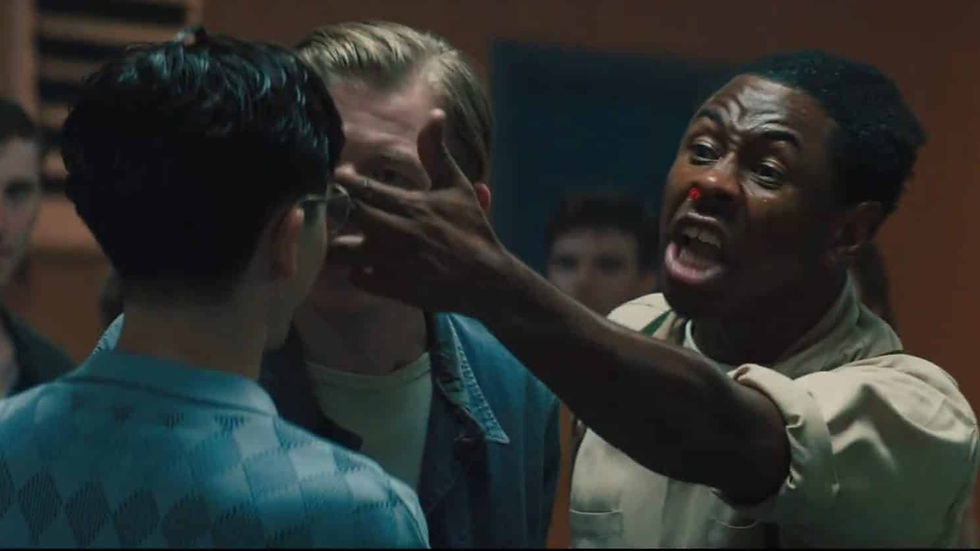
Chalamet is victorious in his performance as Marty Supreme, with his sly tongue and astigmatism. But Wally’s brotherhood with Marty is kinetic. Together, they feel like two sides of the same ambition—both determined to bend a rigid system to their will, just approaching it from different angles.
That dynamic gives Marty Supreme much of its emotional texture. The film may orbit Marty’s singular pursuit of greatness, but it’s Wally who makes that pursuit legible. Tyler plays him as someone who understands the grind intimately—how dreams look from the inside, as well as how they look when you’re responsible for more than just yourself.
It’s a smart, grounded performance, and one that benefits from Tyler’s natural ease opposite Chalamet. Their scenes hum because they feel calibrated: two young men betting on each other (and themselves) in a city that doesn’t make that easy. In a movie obsessed with competition and reinvention, Wally’s loyalty becomes its own quiet act of defiance—and Tyler knows exactly how to play that note.

It's Only a Matter of Time Before I'm Staring At You From the Cover of a Wheaties Box.
What makes Safdie’s first solo film since 2008 resonate isn’t just the outcome of Marty’s pursuit, but the film’s belief in the act of pursuit itself—the quiet dignity of seeing an idea through, no matter how uncertain the path. Safdie relates to this. Chalamet can relate to this. And Tyler, clearly, recognizes it too.
Credited here under his given name, Okonma, Tyler signals a subtle but meaningful shift—not a reinvention, but another creative iteration of himself. He looks comfortable, capable, and ready to keep going. He's on a generational run. And he's just getting started.


Comments