“THE CRAFT’S” ROCHELLE IS THE OG ODE TO BLACK GIRL MAGIC
Updated: Sep 21
I remember the first time I watched The Craft. The 1996 cult classic is basically a ’90s time capsule stuffed with leather, chokers, Catholic schoolgirl plaid, oversized clothes and enough smudged eyeliner to make me nostalgic for an era I was barely old enough to participate in.
But for a Black girl who was already developing a taste for all things spooky, there was really only one person I was watching: Rachel True’s Rochelle Zimmerman.
She was sarcastic. She was witchy. She had curls. I was sold.

SOME SPOILERS FROM THIS POINT FOR A 30 YEAR OLD MOVIE. LOL
True Magic is Neither Black, Nor White
“The Black friend” is certainly not a character type the ’90s invented, but the decade got some serious mileage out of her.
There was Lisa Turtle in Saved by the Bell. Dionne Davenport in Clueless, Bonnie Bennett in The Vampire Diaries, (I could write a whole essay about Bonnie alone) and countless other Black girls positioned somewhere just to the left of the white main character, usually there to offer a good outfit, a better one-liner and occasionally some common sense before disappearing back into the ensemble.
Because these movies and shows tended to be pretty light, there also wasn’t much interest in exploring what being the Black friend in a mostly white social circle might actually feel like.
But Rochelle brought such a unique energy to the moniker that’s frankly hard to ignore. As one of the four teenage witches navigating the ups and downs of high school life, Rochelle stood as a viable point of entry for Black female horror fans in an overwhelmingly white mainstream landscape.
More importantly, she had a storyline of her own.
Rochelle is more than somebody’s sidekick. She’s part of the fun. She’s powerful. And she makes some extremely questionable choices. You know. Like everybody else.
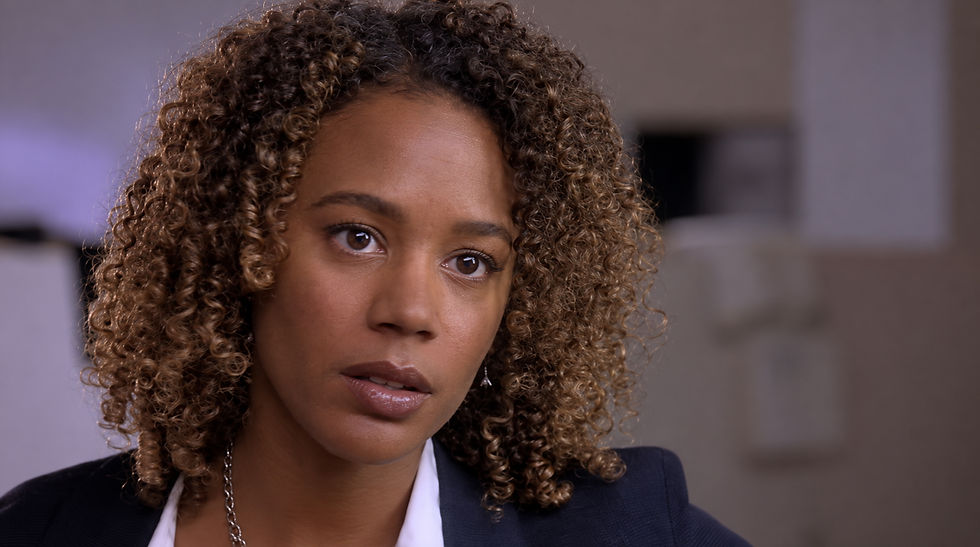
We are the Weirdos, Mister.
Like many young girls, I was always dying to be someone else.
And whenever I watched The Craft, I was absolutely part of their messy, mischievous little girl gang. I was cool. I was magical. I was walking dramatically through hallways while everyone else moved out of my way.
And obviously, I was Rochelle.
She was the only black girl on screen and that was "black girl magic" in a very literal sense, before the phrase became part of the cultural lexicon. Rochelle meant a lot to the girl struggling in the mirror to flatten her curls every single morning before school and who was obsessed with speculative fiction. I was nerdy, searching for validation the way teenagers do. And, of course, as a Black teen, I was already well versed in racism and all of its delightful little variations.
Which is why it was honestly pretty shocking to see The Craft portray racism as overtly as it does.
Even movies now can struggle to acknowledge racial bias and ignorance without either turning the entire thing into a lecture or behaving as though the audience needs racism explained with the patience usually reserved for teaching a toddler how shoes work.

The Craft doesn’t do that.
Rochelle’s conflict with classmate and fellow swim-team member Laura Lizzie, played by Christine Taylor, is painfully straightforward. Laura bullies her. Rochelle knows exactly why. And when she finally confronts Laura about why she’s being singled out, Laura bluntly tells her: “I don’t like Negroids. Sorry.”
So naturally, when Rochelle suddenly finds herself with actual magical power after the coven finally gets its fourth member, she uses some of the occult on Laura, resulting in Laura’s bouncy blonde hair falling out.
Was it right? No.
Was I horrified?
Also no.
Call it schadenfreude. Call it nasty. Call it an abuse of supernatural power. But you’d be hard-pressed to find anyone who had spent every day being targeted, harassed, and othered by the same white girl, daily and wouldn’t at least briefly consider putting a little something-something in the spell book.

Don't worry, the film doesn't cosign this behavior. And The Craft somewhat expertly manages to do this without taking away from what the film is really about—four misunderstood girls who find each other, discover witchcraft, and use witchcraft to reclaim their selfhood, get drunk on power and learn that maybe invoking an ancient deity because high school sucks has some downsides.
Rochelle’s race shapes her experience. It changes what being an outsider looks like for her but it never becomes the sum total of who she is.
Which really shouldn’t feel revolutionary.
And yet.
Rochelle is arguably the most outcast of the four, and she’s still often positioned as a sounding board for everybody else’s drama. I’ve certainly been in spaces with very few people of color where I felt less like a person and more like I’d been cast to fill a particular role.
But in smaller circles of acceptance—my coven—I could be seen.

Hell, I could even be powerful.
Relax, It's Only Magic
I didn’t realize until I was older how important it had been for me to watch Rochelle discover that power.
When she wasn’t facing off with racist bullies, she’d become this confident woman, standing in her own light for seemingly the first time.
And watching her use that power to claim justice for herself was empowering — and so badass! — even if I disagreed with the way she used it. For the first time, I saw a Black girl using her magic to get ahead, or, in Rochelle’s case, to just survive high school.
Because let’s face it, teenagers are vicious. And if I’d had power like that at the time, I probably would’ve used it to get back at a bully or two too.
The Craft was lowkey brave. Its willingness not just to include people of color but to explore the implications of what that means in a narrative that’s not explicitly about race makes it feel unusually perceptive. It should serve as an example of how inclusiveness doesn’t mean diluting your narrative. It can actually enhance it. Who knew!

And looking back, Rochelle was everything good and bad about my teenage years—minus the murder.


she and the twitches were my introduction to black girl characters in supernatural fiction as a kid, so iconic ❤️