NOBODY TOLD ME “ATLANTA” WAS A HORROR SHOW
When Atlanta premiered in 2016, the setup sounded like a pretty conventional comedy. Earn (played by creator Donald Glover), a broke, kinda-homeless Princeton dropout becomes the music manager for his cousin Alfred, a.k.a. Paper Boi (the brilliant Brian Tyree Henry), just as Al’s rap career starts to take off. Hijinks ensue. Earn also has a messy situation with his ex and the mother of his child, Van (Zazie Beetz). Alfred, meanwhile, has a wonderfully weird best friend Darius (LaKeith Stanfield), who functions a little like the stoned and wayward Kramer of the crew.
Except Glover never set out to make a sitcom. He wanted to make a show about what it’s like being Black in America, then take the everyday absurdity of that experience and push it somewhere surreal. And Atlanta committed to the bit. A mysterious man in a suit and bow tie appears to Earn on a bus and later resurfaces in increasingly bizarre self-help commercials. A rapper has an invisible car. Justin Bieber's Black. Alfred gets lost in the woods and meets a strange man who threatens to kill him. Is he real? A spirit? A delusion? Who knows? Atlanta certainly isn’t going to tell you.
What we do know is that Glover, his co-creator brother Stephen, and the rest of the Atlanta team had no interest in making the next Seinfeld. They were making Twin Peaks. Twin Peaks with rappers. And half the fun was never knowing whether the punchline was about to become a threat.

I was legit scared watching this.
When Atlanta wanted to scare you, one of its favorite tricks was to get somebody alone and put them somewhere they couldn’t easily leave.
The most obvious example is “Teddy Perkins,” which starts, as many bad decisions do, with something being offered for free. Darius finds an ad for a piano with multicolored keys and drives a U-Haul out to a secluded mansion to pick it up.
It’s worth noting that every single time a character in this series comes into contact with wealth, no good comes from it. But Darius goes inside anyway. The door is opened by a stranger who is very obviously a Black man with bleached-white skin.
That stranger is Teddy Perkins.
Teddy is soft-spoken, deeply unsettling, and living in this cavernous house with his supposedly sick brother, Benny. He welcomes Darius inside. Gives him a strange two-handed handshake. Eats a soft-boiled ostrich egg in a scene that’s probably done irreparable damage to the Big Ostrich Egg market. And as Darius later admits in a phone call to Al, he knows he should probably leave right about now.
He just really wants that piano. (It really does look pretty cool.)

So he stays.
He and Teddy talk about rap. Teddy scoffs at the art form, then seems even more offended when Darius admits he doesn’t actually play piano. He just likes the instrument as an object.
Then Teddy starts talking about Benny, casually dropping names like Nina Simone and Stevie Wonder as he describes the musicians his brother played alongside in his prime. Benny, Teddy says, is still here. Living in the house. He’s just…not around.
It was around this point that I realized Teddy Perkins was being played by Donald Glover. And somehow, that only makes the whole thing weirder.
The longer Darius stays, the more concerning things he finds. Eventually he makes it into the basement, where Benny rolls out in a wheelchair, his face almost completely hidden beneath heavy bandages and dark sunglasses. Unable to speak, he writes on a chalkboard that Teddy plans to kill them both.
Suddenly that front door feels very, very far away.
It’s full-on Gothic horror, right down to the decaying family secrets.

If “Teddy Perkins” traps Darius by putting him inside a house, “Woods” does something meaner to Alfred. It takes the walls away entirely.
Alfred spends a lot of Atlanta insisting that despite his growing fame, he’s still just a regular guy from Atlanta. In “Woods,” that belief gets tested. After walking away from a could-be girlfriend who keeps talking about branding, image, and all the things he finds irritating about celebrity, Alfred encounters three young men who initially seem like fans.
They jump him and rob him instead.
Al runs. The road gives way to forest. The forest thickens. Paths stop looking like paths. He twists one way, doubles back, pauses. Every direction starts to look like the wrong one.
He’s bleeding. Breathing hard. Day slips into night, the woods get quieter, and what began as an escape from three men with a gun becomes something harder to name.
He meets Wiley.

Wiley follows him through the trees, says things he shouldn’t know about Alfred, and eventually threatens to kill him if he doesn’t get up and find his way out. Is he a random man Alfred happened to meet during the worst day of his life? Some manifestation of his grief? Or just the world’s most aggressive motivational speaker? After all, getting lost on Atlanta is rarely just about geography.
Either way, we’ve seen this before. The older Black men haunting Atlanta’s second season are all ghosts of one kind or another—ghosts of themselves, ghosts of their children, ghosts of who they might’ve been. And now Al has come face-to-face with a ghost of his own.
When Alfred finally stumbles onto the road and sees the fluorescent lights of a gas station, the relief is almost ridiculous.
A convenience store has never looked so much like the gates of heaven.
For Them, by Them.
While Paper Boi’s rise gives Atlanta something resembling a roadmap, Black grievance and white guilt leave plenty of room for Afro-surreal detours.

In “Juneteenth,” Van brings Earn to meet Monique, just one of many bougie people in Van’s life, for a pretentious Juneteenth celebration in a mansion. (If you’re wondering what Juneteenth is, let the Google guide you and may the white guilt flow freely thereafter.) It’s a much more formal affair than you’d expect: Black men sing negro spirituals on the staircase, food is served from dishes shaped like slave ships, and the cocktail menu features shit like Emancipation Eggnog, Plantation Master Poison, Abolition & Absinthe, and Forty Acres and a Moscow Mule.
The party is already cooked by the time Monique’s white husband, Craig, strolls down the staircase shouting, “Happy Freedom Day!” He’s so enthusiastically obsessed with Black culture that he asks Earn why he hasn’t gone to Africa to find his roots, shows him a painting inspired by Malcolm X, and eventually beatboxes while performing slam poetry about Jim Crow.
Are you scared? 'Cause I'm scared.
“Sinterklaas Is Coming to Town” sends the crew to Amsterdam, where Al is really enjoying his stay in a luxe Dutch jail. Earn brings $20k to bail him out, but bail is cheaper than expected, so he gives Al the rest. Al throws the money at his fans as a show of appreciation. This season, the chasm between Al and Paper Boi seems to be closing.

As Earn and Al leave the police station, anti-Blackness closes the distance between Atlanta and Amsterdam. They encounter a Dutch Saint Nicholas and his companion, Zwarte Piet, a Black Moor represented with blackface and a curly Afro wig. Their driver insists the coloring merely represents soot from a chimney.
At the hotel, the blackface keeps coming. First the doormen. Then the cleaning staff. By the time Al arrives at the venue where he’s scheduled to perform, the entire audience is in blackface, their fake fros bouncing with anticipation. Nothing says terror like entertaining a crowd full of minstrels.
Earn tells the organizer Paper Boi is sick and can’t perform. The organizer flies into a rage, vows to destroy him, and chases Earn out of the venue. Looking for Earn to attack, he ends up brutalizing a random concert attendee in blackface instead.
“White Fashion” takes things corporate. After a London-based designer gets backlash for an ill-advised streetwear design—a giant number five below an all-caps CENTRAL PARK. Naturally, he invites Al to join the diversity board for his brand, Esco x Esco, and help deliver an “authentic” apology to the community.

At the press conference, Al sits beside a carefully assembled diversity board while the designer congratulates himself on how so not racist he is. Once the cameras are gone, Al discovers the board is far more self-serving than community-minded. Still, he proposes “Reinvest in Your Hood,” a campaign about “putting Black dollars in Black hands.”
The corporate machine takes it from there. And by the time the ad comes back, everyone from white ski girls to cowboys is proudly declaring “we’re all from some hood.” All-lives-matter-style. And the money meant to go back into Black communities? Redirected to the Red Cross.
While Al is getting a crash course in institutionalized social justice, Darius learns his own lesson about how easily something pure can be easily perverted.
Craving jollof, he takes Sharon, a white Esco x Esco employee, to a tiny Nigerian restaurant. The owner, Mimi, warms to Darius when he orders moi moi and liver and realizes that he’s Naija too.
Sharon studies the place. Mentions her husband’s work with commissary kitchens. Darius pays her little mind.
When he comes back a few days later for lunch, Mimi is gone. The restaurant is gone. In their place is a food truck called “Naija Bowl,” a trendier, more white-friendly facsimile of the original.

Sharon’s inside wearing chef whites and selling her own version of Nigerian food: “Peach BBQ reduction and chunks,” proving there are few things more dangerous on Atlanta than a white person discovering something they think has “potential.”
Darius immediately throws it out.
And the episode ends with Mimi out of a job, Darius out of a home-away-from-home, and Sharon too much of a cultural tourist to notice or care. As Darius just walks away, he's left to figure out how the hell an innocent moment of cultural exchange turned into this.
White people watching this be like… Pain.
“Three Slaps” opens Season 3 with a nightmare that has almost nothing to do with the characters we know. Instead, we meet Loquareeous, a young Black boy whose trouble at school ends with a white counselor reporting his mother. Family and Children Services arrives with cops in tow, and his mother, furious and convinced he had something to do with it, sends him off with the authorities.
His caseworker brings him to a new home, where he meets Amber, a slow-talking, flowy-skirt-wearing white woman who immediately tells Loquareeous he can call her “Mom.”

Strike one.
The house smells like homemade kombucha.
Strike two.
Loquareeous meets his new siblings, three other Black children, and Amber’s wife, Gayle, who's colder, firmer, and far less interested in making him comfortable. For what seems like weeks, raw chicken is cooked in the microwave (strike three!!!), no one seems to know what a washcloth is, and Amber takes the liberty of renaming him Larry.
Then money gets tighter.
Amber and Gayle begin denying the children food and making them work hungry in the family garden. Loquareeous hates his new home. He starts watching his mother-captors closely, waiting for a chance to get out.
At a farmers’ market, Amber and Gayle make the kids wear “free hugs” signs in front of the family kombucha stand. Loquareeous, wearing a fedora no child should have to wear, spots a white cop and runs to him for help. He quickly learns he has no allies.

By now, the parallels are impossible to ignore. Loquareeous’s story borrows from the real story of Devonte Hart and his five foster siblings—Ciera, Abigail, Jeremiah, Hannah, and Markis—six Black children who endured years of abuse at the hands of their adoptive white mothers, Jennifer and Sarah Hart. In 2018, the women killed all six children and themselves by intentionally driving their SUV off a cliff.
The fictional Amber and Gayle move toward the same violence. After antagonizing Loquareeous for being “a snitch,” they load the children into the van for an unexplained trip. Loquareeous can sense something is wrong.
In the van, Amber begins to panic.
“Don’t look back,” Gayle tells her.
Amber doesn’t slow down. She drives straight off the bridge.
Gayle looks back just in time to see Loquareeous roll out of the rear of the van before it plunges into the lake below with everyone else still inside.

Loquareeous watches the van sink. Then he walks home.
A dream within a dream, his story ends just as Atlanta’s lead, Earn, wakes up and Loquareeous recedes into the dreamscape.
Life is but a nightmare?
When you go outside the city white people be acting different.
I've loved horror for as long as I've loved my Blackness. Some of my earliest memories are of sitting in my mother’s lap while she braided my hair, the glow of monsters and ghouls from our small TV washing over us. Horror may seem like an unlikely obsession for a little Black girl, but so much of Blackness in America carries an undercurrent of dread, where the ordinary—wearing a hoodie to run an errand, attending church, passing a huddle of cops in your own neighborhood—can suddenly feel fraught with the possibility of violence.
Glover, director Hiro Murai, and the show’s all-black writers room repeatedly used horror to explore these day to day strange ways Black people learn to move through the world. And Atlanta never stops to unpack any of it for an audience, white or otherwise. It was more interested in the fraught ways these characters lived with their Blackness in a world that could be deeply hostile to it.
The monsters were always there. They just weren’t always supernatural.

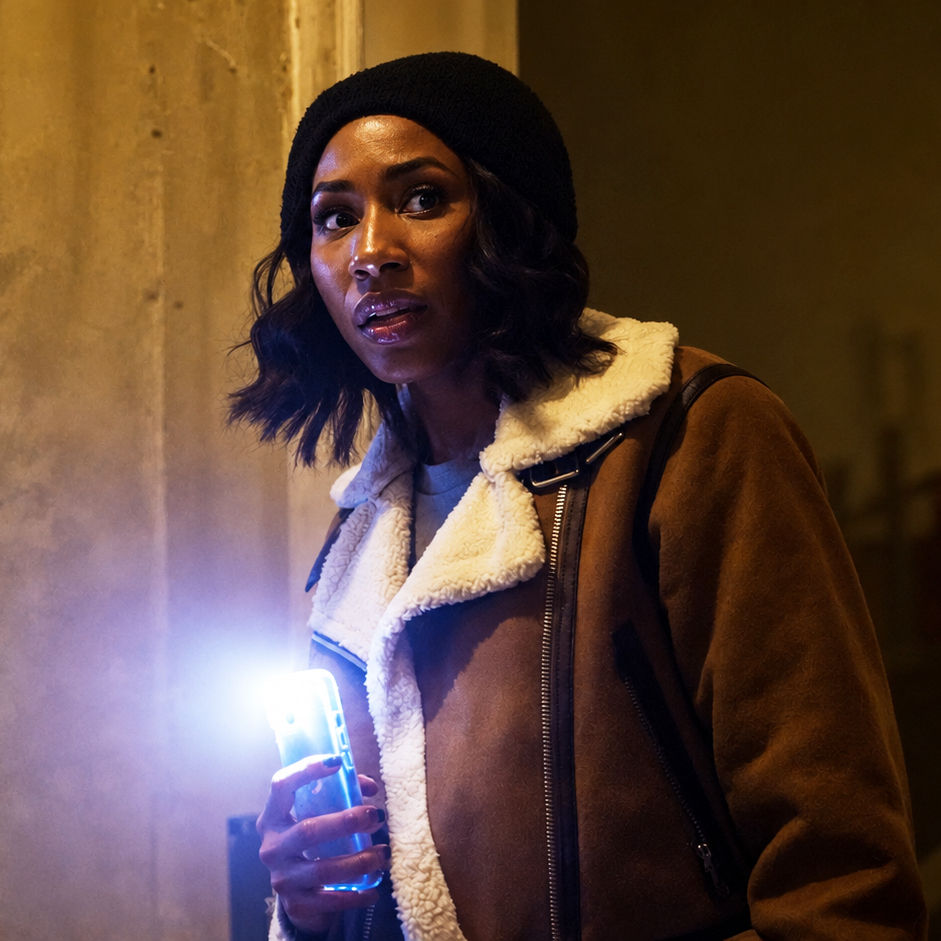


Atlanta had a way of making an episode feel surreal and outside of reality while using stories that absolutely occurred in real life. I imagine there are white viewers who viewed these episodes as exaggerations when they are in fact deeply rooted in the Black experience.
Also- I remember sobbing when Loquareeous escaped the van knowing that never happened for Devonte and his siblings.