“HIS & HERS” IS SUPPOSED TO BE A WHODUNIT. IT’S MORE OF A WHYYOUDODAT
Updated: Aug 11
Somewhere right now, streaming executives are riffling through airport paperbacks like frantic tarot readers, searching for omens of the next bingeable hit. Just days after Harlan Coben’s Run Away briefly topped Netflix’s charts, the algorithm offers His & Hers, a high-profile adaptation of Alice Feeney’s 2020 novel, confidently asking for five hours of your life and offering… vibes.
At first, for at least four of its six episodes, it almost works. Almost.
But the problem with His & Hers isn’t that it’s ridiculous—thriller fans are generous people. We'll forgive coincidences, melodrama, even the occasional illogical choice. The problem is that the show keeps dragging serious, heavy material into its mess without treating any of it with care. Sexual assault. Bullying. Dementia. The death of a child. The death of a sibling. All of it gets tossed into a plot blender and labeled twisty, when nothing in the narrative we're presented earns such a twist. It's twists for twists sake.
Which is a shame, because the cast is doing some of their best work.

*SPOILERS FOR 'HIS & HERS' FROM THIS POINT*
Sometimes I think I am the unreliable narrator of my own life.
The series is led by two actors who keep trying to rescue it. Tessa Thompson and Jon Bernthal are both excellent, and His & Hers frequently benefits from their commitment—even when the writing seems determined to strand them in quicksand.
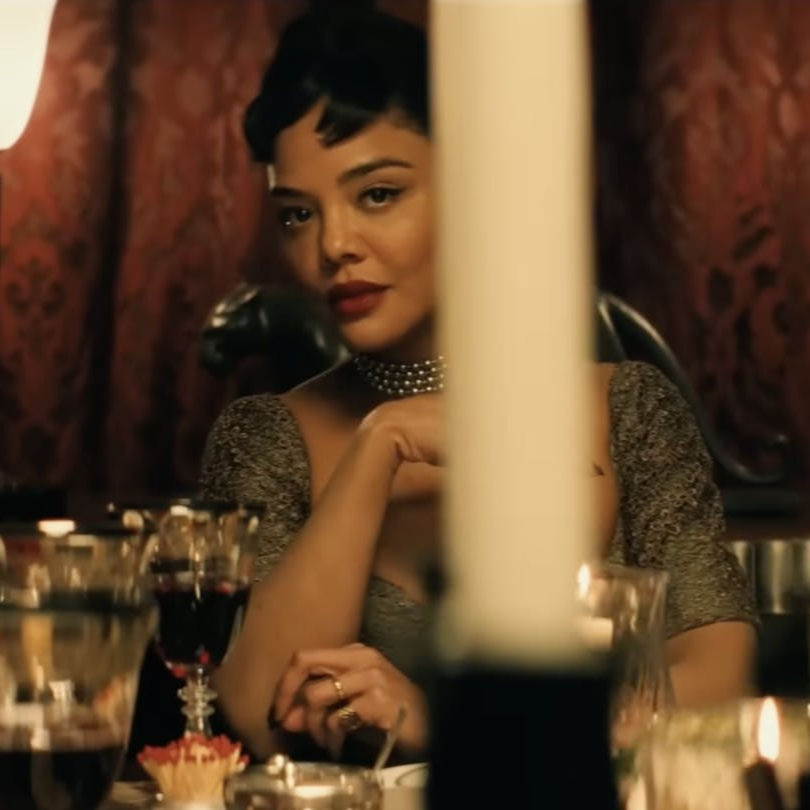
Thompson plays Anna Andrews, a once-promising Atlanta news reporter who returns to her Georgia hometown after a former classmate is murdered. The victim, inconveniently, is someone Anna knew well. More inconveniently, the detective on the case is Jack Harper (Bernthal), Anna’s estranged husband, who also just happens to have been sleeping with the victim. The first episodes tease a compelling setup: two unreliable narrators, each withholding something, circling a crime that might implicate either—or both—of them.
It’s a strong hook, one the show itself keeps repeating through Anna’s (mostly unnecessary) voiceover: There are two sides to every story. Yours and mine. Ours and theirs. His and hers. Which means someone is always lying. It’s the kind of thesis statement that promises ambiguity and moral tension. What it delivers instead is a series of increasingly implausible coincidences and characters who behave less like adults with trauma and more like chess pieces nudged into place by a bored god.

The setting—Dahlonega, Georgia—aims for that now-familiar prestige thriller energy: charming town, ugly secrets, everyone haunted by something. Jack’s investigation includes his partner Priya (played by Sunita Mani), while Anna bulldozes her way back into the newsroom ecosystem she abandoned after personal tragedy. Along the way, we meet a parade of suspects with exactly one defining trait each: the wealthy eccentric husband, the bitter former friends, the sister with issues, the professional rival.
Everyone's connected. Everything's suspicious. None of it is that deep.
Patience is the answer to so many of life's questions.
Where His & Hers briefly comes alive is in the quieter moments between Anna and Jack, particularly when the show allows them to reckon with the loss of their child—a trauma that fractured their marriage and sent Anna fleeing. In these scenes, Thompson and Bernthal find something real: grief that'll never fully subside and a love that'll never fully evaporate. The tragedy is that the series keeps sidelining this emotional core in favor of shock reveals that feel less earned and more stacked.
The plot is riddled with “just happens to be” contrivances. The victim just happens to be Anna’s old classmate. Jack just happens to have a personal connection to her too. Anna just happens to start an affair with a cameraman who just happens to be married to her newsroom rival. Eventually, the sheer accumulation of coincidence stops feeling suspenseful and starts feeling lazy.

Worse, the show asks us to accept Anna as a savvy journalist and Jack as a capable detective while repeatedly demonstrating that neither is especially good at their job. Jack barks obvious orders, overlooks glaring details, and is, at his worse, Ben-Affleck-in-Gone-Girl levels of stupid. Anna barrels forward with tunnel vision, driven less by truth than by professional vindication. And their shared ineptitude ends up being the most convincing evidence of their compatibility.
I think when we finally get what we think we want, it loses its value.
By the time His & Hers reaches its finale—actually, its two finales, one obvious and one thirty-five unbroken minutes of "here's what happened"—the entire structure collapses. The mystery unravels not with revelation but with a huh, and the series’ earlier flirtations with trauma curdle into something queasier.
Here's what happened: Alice, Anna's mother (played by Crystal R. Fox), discovers a tape that depicts the events of what she thinks is a pleasant 16th birthday, but is, in fact, Anna’s rape captured on tape. This compels Alice to act with bloody vengeance and set in motion a murder plot against the other four girls at the bday bash who witnessed the rape and did nothing to stop it.
The hit list includes a bored housewife who also happens to be sleeping with Anna's husband, the now Headmistress of Anna's former fancy high school, Anna's former sister-in-law (whose brother gets over her death real quick), and the "chubby" (their word not mine) newcomer to the friend group who glows up to be Anna's professional rival. (Small towns, amiright.) Alice pulls this off by getting her stab on then faking dementia after each stabbing successfully pulling off the biggest gotcha since The Wizard of Oz.

The twist itself isn't bad, per se. It's how the twist is revealed that baffled me; We learn all this through thirty plus straight minutes of explainer voiceover and flashbacks. Show don't tell can go to hell, I guess.
His & Hers wants to be about perspective, about the stories people tell themselves to survive, about how intimacy can distort truth. What it delivers is a familiar Netflix cocktail: talented actors, overheated plotting, and a refusal to actually interrogate anything it’s depicting.
The Netflix show ends with an image of a united mother and daughter, both of whom know the whole truth about each other’s experiences. While the novel’s open-ended conclusion is provocative, the adaptation's final moments feel a little less satisfying.
The book-to-screen adaptation adds further sides to the story, making tweaks (and, in some cases, significant departures), doing it's best to add layers to the book’s characters and conflicts. And Thompson and Bernthal do what they can to give the series depth. But they’re ultimately stuck navigating dialogue and decisions that make neither their characters nor the mystery feel particularly smart.

6/10 ★ There may be two sides to every story. His & Hers just never figures out what it wants either of them to be.
More Book to Screen Adaptations:


Comments