“A DIFFERENT WORLD” IS BACK; LET’S TALK ABOUT WHY HILLMAN STILL HAS US IN A CHOKEHOLD
When Netflix announced plans to bring A Different World back, my first reaction was basically: haven’t we suffered enough at the hands of reboots? There are, after all, plenty of shows you can dust off without causing a minor cultural incident.
The original premiered in 1987 and became the first mainstream series built around life at an HBCU. Hillman gave us Dwayne Cleophus Wayne’s flip-up glasses, Whitley Gilbert’s vowels, dorm beef, step shows, class politics, bad dates, campus protests and some truly ambitious fashion. It also went straight at AIDS, apartheid, colorism, domestic violence and sexual assault without making Hillman feel like one permanent Very Special Episode.
Nearly forty years later, the sequel returns to that same setting with a generation whose relationship to Blackness, identity, money, sexuality and higher education has shifted, giving Netflix’s A Different World a slightly terrifying assignment. It has to make Hillman recognizable enough to trigger the warm fuzzies without turning the whole thing into a ten-episode alumni weekend.
And, mostly, it pulls it off.
MILD SPOILERS FOR "A DIFFERENT WORLD 2026" FROM THIS POINT.
Baby, Please!
A Different World wasn’t just a Black show. It spun off from The Cosby Show, the biggest sitcom of its era, and for much of mainstream America, an introduction to an upwardly mobile Black family that loved Black art, history and culture as loudly as it loved aggressively patterned sweaters.
The show initially followed Lisa Bonet’s Denise Huxtable, the bohemian Huxtable daughter, to her parents’ alma mater, Hillman College. Hillman was fictional, but HBCUs were already baked into The Cosby Show universe, which regularly shouted out schools like Howard, Tuskegee and Wilberforce. Then Bonet got pregnant with her first child, Zoë Kravitz, during A Different World’s first season, and the show's creator had reservations about having a Black, pregnant, college girl on primetime. So Bonet left the spinoff, and suddenly A Different World had to figure out what it was without the character it had been built around.

Enter Debbie Allen.
Allen, a Howard alumna herself, took over in season two and reworked the series into a true ensemble. The center of gravity shifted to Whitley and Dwayne, Jasmine Guy’s Southern belle with expensive taste and Kadeem Hardison’s math nerd from pre-gentrification Brooklyn with absolutely no shortage of confidence. Their will-they/won’t-they eventually gave us one of the greatest moments in tv history: Dwayne interrupting Whitley’s wedding to another man and begging her to marry him instead. Poor Papa Pope never got over it (iykyk).
But Whitley and Dwayne were only part of what A Different World became. Kim, Freddie, Ron, Jaleesa and a revolving door of Black actors who either already were or soon would be very famous (Diahann Carroll, Loretta Devine, Halle Berry, Tisha Campbell, Jada Pinkett) made the show an open door for Black talent. The show also became a showcase for iconic Black fashion, Black hair, Black music, and the issues its very Black audience was actually living through.
That familiarity wasn’t just a sitcom device. It's part of what makes HBCUs such an attractive proposition for Black students in the first place. And Felicia Pride, showrunner of the reboot (the original now appears as A Different World 1987 in the Netflix carousel), honors that tradition while giving it a modern spin.

If you're going to be a bear, be a grizzly.
Pride shoots the new A Different World in the same single-camera format as Grown-ish and Dear White People, giving Hillman a cooler, more understated feel that stops just short of going full Bel-Air.
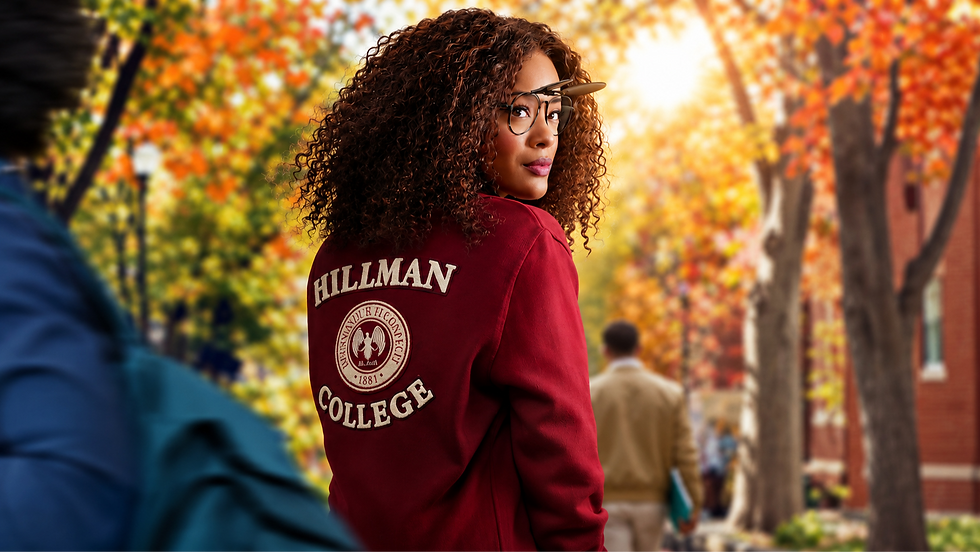
At the center of it all is Deborah Wayne (Tony winner Maleah Joi Moon), Whitley and Dwayne's youngest daughter, as she reluctantly starts her freshman year at Hillman after getting rejected from her dream school, Tisch. (Yes, Whitley and Dwayne’s baby is in college. Take whatever time you need with that information.) She's a creative, slightly scattered free spirit who exudes exactly the kind of confidence you’d expect from a girl whose parents are basically Hillman royalty, plus the financial cushion, family connections and occasional delusion that come with it.
Deborah also has unfinished business, romantic-stylez, with Shaquille (Cornell Young IV), the football-star son of her dad’s old roommate, smooth schemer Ron Johnson (Darryl M. Bell). Despite being second-generation Hillmanites, neither Deborah nor Shaquille is entirely convinced Hillman's where they belong.

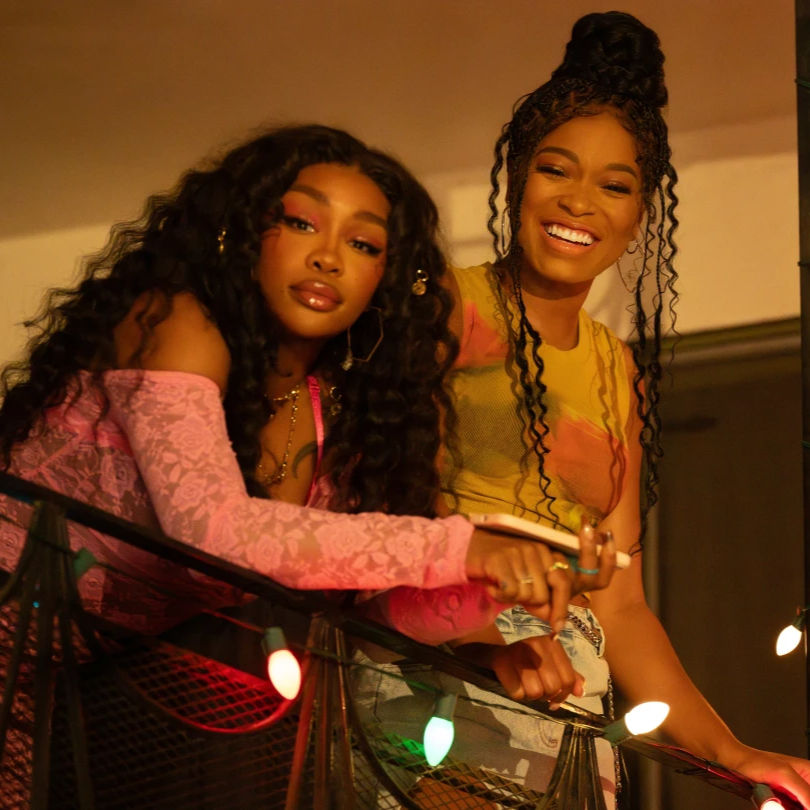
Her inner circle includes roommate Rashida Duvall (Alijah Kai), a driven scholarship student who calls herself “the Simone Biles of school.” Their eventual friendship has shades of Whitley’s odd-couple bond with her own Hillman roommate, Kim (Charnele Brown, who also guest stars). Hazel Henry, meanwhile, (Kennedi Reece), a church girl with big ambitions arrives at Hillman with a very specific extracurricular goal: secure a God-fearing husband.
Among Shaquille’s boys are Kojo Achebe (Chibuikem Uche), an aspiring fashion designer whose career plans aren't exactly thrilling his strict African parents, and Amir Rodale (Jordan Aaron Hall), an openly queer, formerly incarcerated student whose time in juvie keeps finding ways to follow him onto campus.
And Hillman itself has problems. The school's in the middle of a funding crisis that blows up during freshman convocation, with Dwayne now working in the administration and trying to keep his alma mater afloat.
Still, campus life is constantly humming. Political debates animate common rooms, and flirtations heat up over comfort food at Hillman’s hangout, The Pit. But what really makes the school is its people: Black teens from every conceivable background forging lifelong friendships under the watch of adults who actually seem invested in helping them figure themselves out.

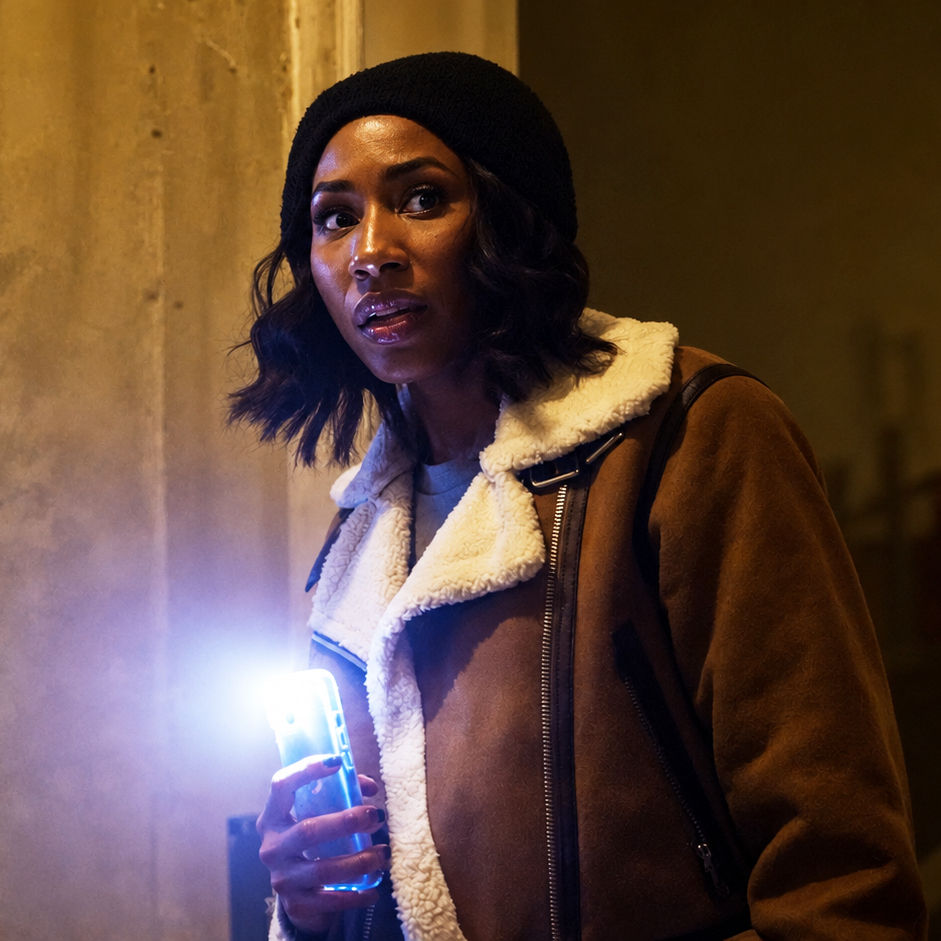
Five episodes in, that sense of community comes through when Hillman receives a bomb threat. Students and faculty, including Dwayne Wayne and Professor Freddie Brooks (Cree Summer, reprising her role as Hillman’s resident social justice crusader), are left sitting with the unnerving question of what safety even means in a place that's supposed to feel like home. While everyone waits for the threat to clear, Deborah starts singing Tevin Campbell’s “Can We Talk.” One by one, the other students join in, and it’s honestly one of the season’s most affecting scenes.
It’s also a tiny glimpse at what future seasons could be if the reboot stops feeling so beholden to where it came from and starts breaking completely new ground of its own.
Relax, relate, release!
Deborah Wayne is kinda the ideal Hillman entry point. Her dad is now provost, and her mom, a beauty mogul to absolutely no one’s surprise, is as involved in the alumni scene as you’d expect the namesake of Gilbert Hall to be. Deborah grew up around campus fixtures like Professor Freddie and Pit proprietor Nellie Gaines (Famecia Ward). So while the average freshman is still figuring out where the registrar’s office is, Deborah has basically had backstage access to Hillman her entire life.

That setup does two things at once. It gives longtime fans plenty of familiar faces to enjoy, but it also lets the series peek into the high-stakes higher-ed bureaucracy students usually only become aware of once something has gone spectacularly wrong.
But the thing that makes the A Different World sequel series stand out is also the thing that can slow it down: just how richly it rewards anyone who has spent years sticking with the franchise. And all that nostalgia can often make the new series feel like it’s being supervised by its own legacy. Every time the younger cast starts building a rhythm, another callback threatens to remind us that the old Hillman is standing just off-camera.
When Dwayne and his buddies start reminiscing about their college days, it’s not just another "unc storytime" because we actually know what they’re talking about. These aren’t vague stories about some wild thing they did back in the day. They’re callbacks to moments, exchanges and references fans have come to know by heart.
And when Deborah vents to Freddie about her “warden” mother, Freddie’s eye roll comes with decades of context. Not just because Whitley is a lot, but because we remember the hell she put Freddie through when they were Hillman kids.

We’re inside the inside jokes. That’s part of the fun. It’s also where the series sometimes feels most attached to the version of Hillman we already know, even as its new class starts making a case for a version of its own.
If we as Hillman men don't treat our women right, they'll go to somebody white.
But I will say, at least A Different World does a good job of justifying the presence of its legacy characters. Dwayne’s new role gives him and Whitley enough of a reason to lurk around campus (though having your parents fluttering about your college? Talk about a buzzkill), while other familiar faces feel woven into Hillman rather than dropped in for applause.
What I’m rooting for now is a little more confidence. The reboot already has a strong young cast, a rich campus life with its own internal lore and traditions, and plenty of affection for the show that came before it. It doesn’t need to keep proving that it belongs in the family.
By the end of the season, A Different World is just beginning to feel less like a reboot protecting a beloved property and more like an actual show with somewhere to go. Now it just needs to trust itself enough to go there.

7.5/10 ★ A worthwhile new series that's just a little too beholden to its own legacy.
Comments